The spelled-out intro to neural networks and backpropagation: building micrograd
Andrej KarpathyIntro4.41M views
Building micrograd, a tiny autograd engine, to understand backpropagation completely.
267,244 videos · Algorithms, systems, security, machine learning and building software.
Intro4.41M views
Building micrograd, a tiny autograd engine, to understand backpropagation completely.

8.21M views
Building a GPT-style language model from scratch in code, following 'Attention Is All You Need'.

Intro11.6M views
How transformer models (the 'T' in GPT) turn text into vectors and predict the next token, step by step.

Advanced241K views
Michael Steil explains the entire Game Boy: CPU, memory map, PPU, sound and cartridge hardware in one hour.

Intro3.05M views
Hamming codes and the origin of error correction: how data can fix its own errors.
 1:55:58
569K views
Makemore part 3: activations, gradients and batch normalisation — diagnosing a network's health from its statistics.
 24:26
2.23M views
Freya Holmér builds Bézier curves from linear interpolation up, covering de Casteljau's algorithm, derivatives, arc length and their use in games and graphics.
 3:31:24
10.2M views
A general-audience deep dive into how large language models like ChatGPT are built: pretraining data, tokenisation, neural network internals, post-training and RL.
 1:15:40
613K views
Makemore part 2: a multilayer perceptron language model following Bengio et al. 2003, with embeddings, minibatches and train/dev/test splits.
3.8M views
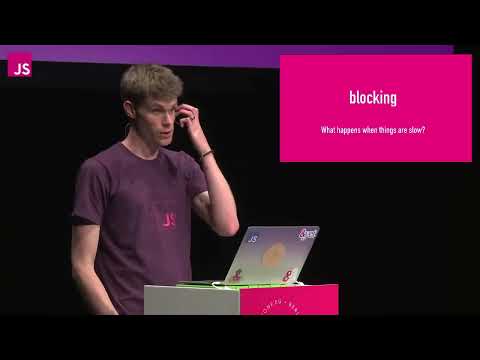
Philip Roberts explains the JavaScript runtime: call stack, web APIs, the callback queue and the event loop, with a visualiser that makes asynchronous execution concrete.
 4:01:26
1.23M views
Karpathy reproduces GPT-2 (124M) from scratch: the model, efficient training on GPUs, mixed precision, and evaluation.
 56:22
305K views
Makemore part 5: building a WaveNet-style convolutional hierarchy and organising PyTorch code into modules.

Intro421K views
Lecture 1A of Abelson and Sussman's 1986 Structure and Interpretation of Computer Programs course: what computer science is about, and an introduction to Lisp.

Intro4.88M views
The attention mechanism in detail: queries, keys, values and how context flows between words.
 1:57:45
Intro1.32M views
Karpathy builds makemore, a character-level bigram language model, introducing PyTorch tensors, sampling and negative log-likelihood loss.
 1:55:24
389K views
Makemore part 4: backpropagating manually through a full MLP and batchnorm layer, without autograd.
 38:14
634K views
Adding RAM to the 6502 computer and working through bus timing diagrams from the datasheet.
 16:01
775K views
Edge-triggered D flip-flops: how an RC edge detector turns a latch into something that changes only on the clock edge.
 2:27:41
Intro1.41M views
CS50x 2024 lecture 1: an introduction to C — syntax, types, conditionals, loops and compiling.
 43:54
1.86M views
How reliable data transmission works: framing, errors, acknowledgements and retransmission.
 2:04:55
Intro2.2M views
CS50x 2024 lecture 0: how computers represent information, algorithms, and first programs in Scratch.
 33:00
838K views
The SPI serial bus explained with a logic analyzer: clock, MOSI, MISO and chip select.
 15:10
531K views
Designing the arithmetic logic unit for the 8-bit computer, using adders and two's-complement subtraction.
 2:02:12
Intro460K views
CS50x 2024 lecture 3: algorithms — searching, sorting, running time and recursion.
 1:01:39
Advanced220K views
Rich Hickey distinguishes 'simple' (not intertwined) from 'easy' (familiar), and argues for designing software by reducing complexity rather than chasing convenience.

Intro629K views
Lecture 1 of MIT 18.404 Theory of Computation by Michael Sipser: finite automata, regular languages and regular expressions.
 2:14:05
Intro620K views
CS50x 2024 lecture 7: SQL — relational databases, queries, joins and SQL injection.

65.7K views
Jim Weirich derives the Y combinator live, step by step, using nothing but Ruby lambdas, and along the way teaches the refactorings of lambda calculus.
 26:10
1.02M views
The RS-232 serial protocol: voltage levels, start and stop bits and baud rates, decoded on a scope.
 2:02:49
Intro582K views
CS50x 2024 lecture 5: data structures — linked lists, trees, hash tables and tries.

Advanced143K views
Philip Wadler explains the Curry–Howard correspondence: how logic and programming languages were discovered independently to be the same thing.
 2:17:23
Intro399K views
CS50x 2024 lecture 4: memory — pointers, addresses, malloc and the heap.
 9:36
527K views
Bus architecture and how register transfers work in his 8-bit breadboard computer.
 9:16
 28:10
1.29M views
Connecting a character LCD to the 6502 computer through a VIA chip and driving it from assembly.

752K views
MIT's Missing Semester lecture on Git: the data model of blobs, trees, commits and references, then the commands built on it.