38:14

RAM and bus timing — 6502 part 6
Ben Eater634K views
Adding RAM to the 6502 computer and working through bus timing diagrams from the datasheet.
267,244 videos · Algorithms, systems, security, machine learning and building software.
38:14634K views
Adding RAM to the 6502 computer and working through bus timing diagrams from the datasheet.
 16:01
775K views
Edge-triggered D flip-flops: how an RC edge detector turns a latch into something that changes only on the clock edge.
 43:54
1.86M views
How reliable data transmission works: framing, errors, acknowledgements and retransmission.
 33:00
838K views
The SPI serial bus explained with a logic analyzer: clock, MOSI, MISO and chip select.
 15:10
531K views
Designing the arithmetic logic unit for the 8-bit computer, using adders and two's-complement subtraction.
 26:10
1.02M views
The RS-232 serial protocol: voltage levels, start and stop bits and baud rates, decoded on a scope.
 2:17:23
Intro399K views
CS50x 2024 lecture 4: memory — pointers, addresses, malloc and the heap.
 9:36
527K views
Bus architecture and how register transfers work in his 8-bit breadboard computer.
 9:16
 28:10
1.29M views
Connecting a character LCD to the 6502 computer through a VIA chip and driving it from assembly.
 1:22:28
Advanced80.4K views
MIT 6.824, lecture 5: Go concurrency patterns and how they apply to implementing Raft.
 56:54
Advanced24.1K views
MIT 6.824, lecture 19: Bitcoin's proof-of-work consensus as a distributed system.
 1:19:01
22K views
MIT 6.824, lecture 20: Blockstack and decentralized naming and storage.
 1:20:03
Advanced35.5K views
MIT 6.824, lecture 11: Cache consistency in the Frangipani distributed file system.
 1:20:32
80.9K views
MIT 6.824, lecture 8: ZooKeeper's coordination service and its consistency guarantees.
 1:08:13
Advanced30.5K views
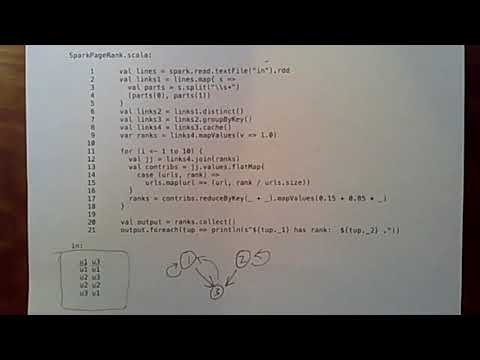
MIT 6.824, lecture 15: Spark's resilient distributed datasets for big-data processing.
 1:23:29
Advanced19.1K views
MIT 6.824, lecture 17: Causal consistency in the COPS system.
 34:15
3.76M views
How a USB keyboard communicates with a computer: low-level USB signalling, decoded with an oscilloscope.
 1:13:40
Advanced16.9K views
MIT 6.824, lecture 18: Fork consistency and Certificate Transparency.
 1:17:24
Advanced59.5K views
MIT 6.824, lecture 12: Distributed transactions, two-phase locking and two-phase commit.
 1:22:22
Advanced194K views
MIT 6.824, lecture 3: The Google File System paper: chunk servers, a single master and relaxed consistency.
 1:19:38
Advanced42.3K views
MIT 6.824, lecture 10: Amazon Aurora's design for a cloud-replicated database.
 1:18:01
35.7K views
MIT 6.824, lecture 16: How Facebook scaled memcached and kept caches consistent.
 37:18
384K views
Ben Eater walks through Steve Wozniak's original Apple 1 monitor program (WozMon), line by line.
 30:36
803K views
How the 2021 Facebook outage happened: BGP, DNS and how a configuration change took Facebook off the internet.

Intro384K views
The opening lecture of Martin Kleppmann's Cambridge distributed systems course: what distributed systems are, why we build them, and the problems they face.
 1:22:37
Advanced24K views
MIT 6.824, lecture 14: Optimistic concurrency control in FaRM.
 27:52
1.46M views
Designing the control logic of an 8-bit breadboard computer: how microcode steps drive each instruction.
 27:36
665K views
How hardware interrupts work on the 6502: IRQ and NMI, interrupt handlers and their pitfalls.
 1:19:07
39.8K views
MIT 6.824, lecture 13: Google Spanner: TrueTime and externally consistent transactions.
 1:20:22
283K views
MIT 6.824, lecture 2: Remote procedure calls and threads in Go, the building blocks for the course labs.
 13:02
3.12M views
How transistors are combined into AND, OR, NOT and other logic gates, demonstrated on a breadboard.

Advanced501K views
Emery Berger shows why performance measurement is so often wrong (layout effects, noise) and introduces causal profiling with the Coz profiler.
 18:20
579K views
What it means for a computer to be Turing complete, using his breadboard computer as the example.
 24:25
826K views
How the 6502 stack and subroutine calls (JSR/RTS) work, debugged on real hardware with a logic analyser.
 13:49
1.38M views
Why computers use two's complement to represent negative numbers, compared with sign-magnitude and ones' complement.