Powers of Ten™ (1977)
Eames Office9.48M viewsCharles and Ray Eames's classic short film zooming out and in by powers of ten, from a picnic to the edge of the known universe and down to a proton.
63,459 videos · Full university lectures and long-form documentaries.
Charles and Ray Eames's classic short film zooming out and in by powers of ten, from a picnic to the edge of the known universe and down to a proton.

Terence Tao explains the cosmic distance ladder, the chain of methods from Earth's radius to distant galaxies.

David Tong explains why quantum fields, not particles, are the fundamental ingredients of the universe and how the Standard Model is built on them.
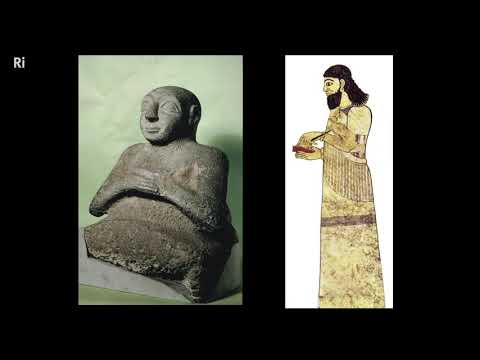
Irving Finkel explains how cuneiform works and how scholars deciphered it, with tablets from the British Museum.
 46:02
Jim Al-Khalili explains what modern physics says about time: relativity, the block universe, entropy and the arrow of time.

Stephen Boyd's first lecture of Stanford EE364A Convex Optimization: what optimization problems are and why convexity makes them tractable.

A talk at The National Museum of Computing on the design of the Apollo Guidance Computer: core rope memory, the instruction set and the 1202 alarms.

The 1982 Bell Labs film on the UNIX system, with Ken Thompson, Dennis Ritchie and Brian Kernighan explaining pipes, tools and the shell.

Anil Seth on consciousness as controlled hallucination: perception as prediction and what neuroscience can measure.

Robert Sapolsky's lecture on stress physiology: why the stress response helps zebras but harms chronically stressed humans.

Lecture 1 of MIT 6.00 (Fall 2008): what computation is, declarative vs imperative knowledge and the start of programming in Python.

Episode 1 of Caltech's The Mechanical Universe: David Goodstein introduces the series and the ideas from Copernicus to Newton.

Eric Cline lectures on the collapse of Late Bronze Age civilizations around 1177 BC: trade networks, systems collapse and the Sea Peoples.

Douglas Crockford's history of programming languages leading up to JavaScript, the first of his lecture series on the language.
 1:14:08
Juan Maldacena on what spacetime is, from general relativity to the idea that it emerges from quantum entanglement.

Bill Hammack introduces his performance of Faraday's 1848 Christmas lectures on the chemistry of a candle.
 53:58
NOVA's documentary on quantum mechanics: superposition, entanglement and the experiments that established them, with working physicists.

Geologist Nick Zentner explains the evidence for great Cascadia megathrust earthquakes, from ghost forests to Japanese tsunami records.

Ron Vale introduces kinesin, dynein and myosin motor proteins and how they convert ATP into directed motion.
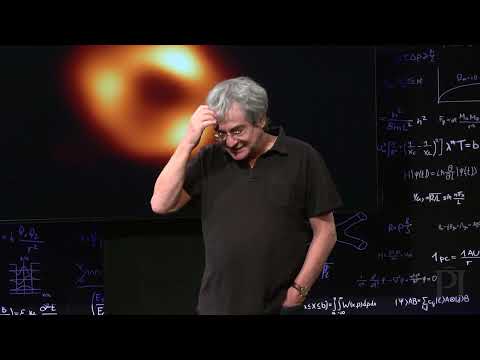 1:07:41
Carlo Rovelli takes the audience inside a black hole: horizons, what general relativity predicts and what loop quantum gravity suggests at the centre.
 54:10
How sinkholes form: karst geology, groundwater and the human activities that trigger collapses.
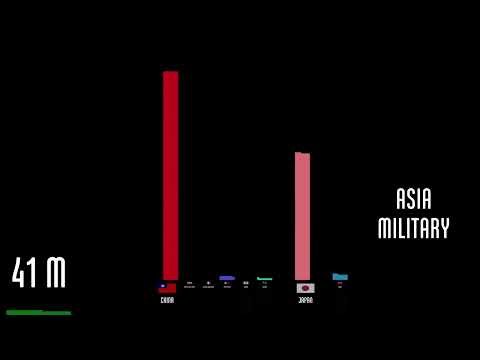
Neil Halloran's animated, data-driven documentary on the human cost of World War II and the long-term trend in war deaths.
 43:07
David Blight explains why the Civil War era still holds such power over American memory and sets out the course's themes.

The first of Marc Levoy's lectures on digital photography: optics, sensors and the computational pipeline that turns light into an image.

John Hennessy and David Patterson's Turing Award lecture on the future of computer architecture.
 53:56
Excavating tombs of the priests of Amun in Egypt and what they reveal about Theban society.

Lecture 1 of MIT 6.042J Mathematics for Computer Science: what a proof is, propositions, and proof by contradiction and induction.
 53:32
How cats were domesticated and how their senses and behaviour work, from genetics and archaeology.

Sean Carroll's public lecture on quantum field theory, the Higgs and where fundamental physics may go next.

Douglas Hofstadter argues that analogy-making is the core mechanism of human thought, with many concrete examples.

The full feature documentary on DeepMind's AlphaGo and its 2016 match against Lee Sedol, including how the system was built and tested.
 53:50
How the human brain evolved: fossil and genetic evidence for the growth of our brains.
 53:55
Göbekli Tepe and the Stone Age temples of Anatolia: what excavations reveal about hunter-gatherers who built monuments.
 54:02
How genetic mutations such as lactase persistence let human populations digest new foods.

Opening lecture of Stanford CS107 Programming Paradigms (Jerry Cain): course overview and the low-level memory model behind C data types.

Steve Blank traces Silicon Valley's origins to WWII electronic warfare and Cold War military funding.
As an Amazon Associate, BrighterTube earns from qualifying purchases.