22:11
But what is the Riemann zeta function? Visualizing analytic continuation
3Blue1Brown5.39M viewsVisualises the Riemann zeta function as a transformation of the complex plane and explains what analytic continuation actually means.
785,248 videos · Physics, biology, chemistry, astronomy and the mathematics underneath them.
22:11Visualises the Riemann zeta function as a transformation of the complex plane and explains what analytic continuation actually means.
 28:34
Explains why light appears to slow down in glass and where the index of refraction comes from, building from driven oscillating charges.
 10:04
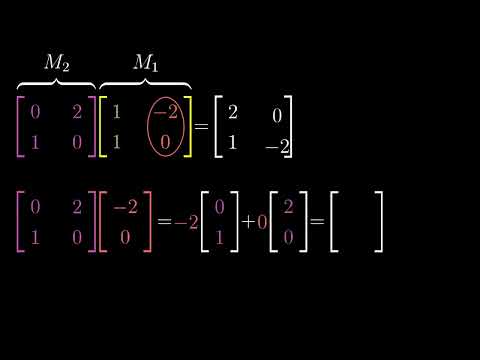
Matrix multiplication as composition of linear transformations, chapter 4 of Essence of Linear Algebra.
 21:14
Uses the 'medical test paradox' to motivate rewriting Bayes' rule in terms of odds and Bayes factors.
 9:59
Linear combinations, span and basis vectors, chapter 2 of Essence of Linear Algebra.
 23:01
Convolution seen three ways: moving averages, polynomial multiplication and probability, ending with FFT-based fast convolution.
 31:15
What the central limit theorem actually says, its assumptions, and why sums of random variables tend to a bell curve.
 34:41
Builds the Laplace transform from exponentials and the s-plane, showing what poles mean and how it turns differential equations into algebra.
 22:21
Starts from a curious spiral pattern in plots of primes and uses it to explain residue classes, Euler's totient and Dirichlet's theorem on primes in arithmetic progressions.
 21:36
Explains fractal dimension and why most fractals are not perfectly self-similar, with coastlines and the Sierpinski triangle as examples.
 31:51
Builds intuition for quaternions by stereographic projection, working up from complex numbers to 4D rotations.
 4:50
A 5-minute chemistry worked example from The Glaser Tutoring Company, solving exercise 13.5 of OpenStax Chemistry 2e step by step.
 3:55
A 4-minute chemistry worked example from The Glaser Tutoring Company, solving exercise 7.43 of OpenStax Chemistry 2e step by step.
 5:48
A 6-minute chemistry worked example from The Glaser Tutoring Company, solving exercise 9.43a of OpenStax Chemistry 2e step by step.
 10:36
A 11-minute physics video from KhanAcademyEspañol covering Movimiento de una partícula cargada en un campo magnético, the section of OpenStax University Physics Volume 2 (Spanish edition) it is paired with.
 7:01
A 7-minute chemistry worked example from The Glaser Tutoring Company, solving exercise 8.33c of OpenStax Chemistry 2e step by step.

Explores the counter-intuitive behaviour of spheres packed in boxes in higher dimensions.
 2:37
A 3-minute physics video from Flipping Physics covering Newton’s Third Law, the section of OpenStax University Physics Volume 1 it is paired with.
 8:37
A 9-minute chemistry video from Professor Dave Explains covering Reactions of Epoxides: Ring-Opening, the section of OpenStax Organic Chemistry (McMurry) it is paired with.
 6:53
A 7-minute physics worked example from The Glaser Tutoring Company, solving exercise 7.29 of OpenStax College Physics 2e step by step.
 3:03
A 3-minute physics worked example from The Glaser Tutoring Company, solving exercise 22.14 of OpenStax College Physics 2e step by step.
 5:22
A 5-minute physics video from KhanAcademyEspañol covering La transformación de Lorentz, the section of OpenStax University Physics Volume 3 (Spanish edition) it is paired with.
 19:17
A 19-minute chemistry video from KhanAcademyEspañol covering Entropía, the section of OpenStax University Physics Volume 2 (Spanish edition) it is paired with.
 1:58
A 2-minute neuroscience video from Neuroscientifically Challenged covering Where Are Rhythms in the Brain?, the section of OpenStax Introduction to Behavioral Neuroscience it is paired with.
 5:03
A 5-minute math video from KhanAcademyEspañol covering Hallar los límites: enfoques numéricos y gráficos, the section of OpenStax Precalculus 2e (Spanish edition) it is paired with.
 5:30
A 6-minute chemistry worked example from The Glaser Tutoring Company, solving exercise 8.43c of OpenStax Chemistry 2e step by step.
 15:59
A 16-minute physics video from Flipping Physics covering Drag Force and Terminal Speed, the section of OpenStax University Physics Volume 1 it is paired with.
 1:58
A 2-minute neuroscience video from Neuroscientifically Challenged covering Gastrulation and Formation of the Neural Tube (Neurulation), the section of OpenStax Introduction to Behavioral Neuroscience it is paired with.
 6:33
A 7-minute math video from Professor Dave Explains covering The Ellipse, the section of OpenStax Algebra and Trigonometry 2e it is paired with.

Introduces de Broglie–Bohm pilot-wave theory, how it reproduces quantum mechanics, and its costs (non-locality).
 2:00
A 2-minute neuroscience video from Neuroscientifically Challenged covering Neurotransmitters Made from Fats, the section of OpenStax Introduction to Behavioral Neuroscience it is paired with.
 8:34
A 9-minute chemistry worked example from The Glaser Tutoring Company, solving exercise 7.33 of OpenStax Chemistry 2e step by step.
 6:13
A 6-minute chemistry worked example from The Glaser Tutoring Company, solving exercise 21.27c of OpenStax Chemistry 2e step by step.

Explains how the roles of space and time swap inside a black hole's event horizon using Schwarzschild coordinates and light cones.
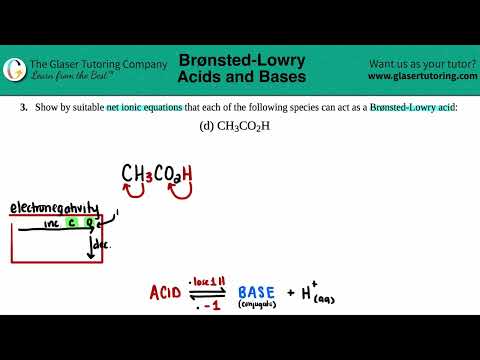 4:24
A 4-minute chemistry worked example from The Glaser Tutoring Company, solving exercise 14.3d of OpenStax Chemistry 2e step by step.
 9:57
A 10-minute chemistry worked example from The Glaser Tutoring Company, solving exercise 7.3 of OpenStax Chemistry 2e step by step.
As an Amazon Associate, BrighterTube earns from qualifying purchases.