11:39

The Ingenious Design of the Aluminum Beverage Can
engineerguy19.4M views
Bill Hammack walks through every design decision in the aluminium beverage can, from the domed bottom to the necked top.
203,959 videos · How machines, structures and electronics work — and how to build them.
11:3919.4M views
Bill Hammack walks through every design decision in the aluminium beverage can, from the domed bottom to the necked top.
 15:51
488K views
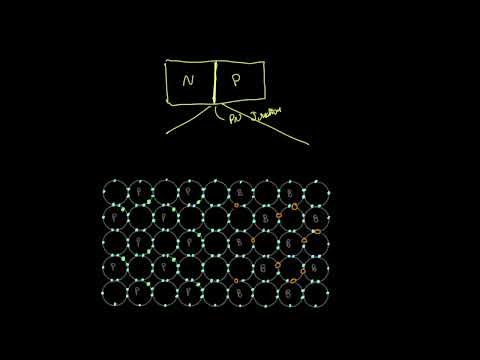
How semiconductors work: doping, P-type and N-type silicon and the PN junction.
 14:59
1.36M views
Laminar and turbulent flow, the Reynolds number and boundary layers.
 24:35
701K views
Steels and heat treatment: phases, the iron-carbon diagram, quenching and tempering.
 10:02
Intro2.2M views
Stress and strain: normal and shear stress, Hooke's law and the stress–strain curve.
 13:44
4.59M views
Bernoulli's equation: pressure, velocity and elevation in flowing fluids, with worked examples.
 9:34
2.65M views
Was Roman concrete really better? The chemistry and engineering of Roman versus modern concrete.
 21:52
88.1K views
Part 6 of Dan Gelbart's 18-part Building Prototypes course: coatings and surface finishes, with techniques shown on real parts in his shop.
 9:37
4.99M views
How plastic injection moulding works, including mould design and its constraints.
 12:55
758K views
The design of the two-litre plastic soda bottle, from material choice to blow moulding.
 17:58
2.04M views
How metals work: crystal structures, dislocations, alloying and heat treatment.
 49:50
137K views
Episode 7 of The Secret Life of Components: Tim Hunkin on glue, the types, how they work and how he chooses and uses them in his machines.
 17:11
46.9K views
Part 11 of Dan Gelbart's 18-part Building Prototypes course: non-metal materials, with techniques shown on real parts in his shop.
 16:18
2.78M views
Failure theories — Tresca, von Mises and others — for predicting when materials yield.
 12:01
45K views
Part 12 of Dan Gelbart's 18-part Building Prototypes course: plastics forming and casting, with techniques shown on real parts in his shop.
 10:01
1.21M views
Making silica aerogel at home: sol-gel chemistry and supercritical drying.

2.25M views
The US Chemical Safety Board's animated reconstruction of the 2005 BP Texas City refinery explosion and its causes.
 46:07
1.91M views
Breaking Taps speedruns 30 years of lithography technology at home.
 35:03
78.9K views
Dan Gelbart's Building Prototypes, Part 9: choosing materials for prototypes.
 9:42
57.1K views
High vacuum basics part 2: the pump-down procedure from atmosphere to 1e-6 torr.
 23:59
204K views
Monolithic telescope part 1: optical design and aspherics.
 11:36
133K views
Used nuclear fuel and reprocessing: what is in spent fuel and how it can be separated.
 13:32
145K views
Ultralight metallic microlattices: making hollow nickel lattices and why they are so light and strong.
 10:33
95K views
How nuclear fission works: neutron capture, chain reactions and energy release.
 14:40
220K views
Huygens Optics experiments with methods for etching fine patterns into glass.
 12:56
1.14M views
How to make very flat optical surfaces on glass by grinding and polishing.
 18:34
610K views
The ABCs of radiation: alpha, beta and gamma radiation, how each interacts with matter and how it is shielded.
 9:42
889K views
Nitinol's shape-memory effect and superelasticity, demonstrated and explained.
 20:20
746K views
Making OLED displays at home, explaining materials and deposition.
 27:15
23.9K views
Energy-dispersive X-ray spectroscopy: how a silicon drift detector identifies elements in an SEM, theory then demo.
 16:51
108K views
Sam Zeloof: High-vacuum chamber basics, part 1.
 24:37
198K views
Electron-beam lithography with a scanning electron microscope: drawing microscopic patterns.
 11:40
92.2K views
Sam Zeloof: Etching silicon with plasma (reactive-ion etching).

3.77M views
Part 1 of a tour of Kodak's film factory: how photographic film is coated and manufactured at industrial scale.
 18:17
203K views
Doping silicon with a laser to create working PN junctions.
 34:41
A 35-minute video from NPTEL IIT Bombay: “Week 1: Lecture 2: Part 2: Additive Technology Landscape – Steterolithography”.