Powers of Ten™ (1977)
Eames Office9.48M viewsCharles and Ray Eames's classic short film zooming out and in by powers of ten, from a picnic to the edge of the known universe and down to a proton.
63,459 videos · Full university lectures and long-form documentaries.
Charles and Ray Eames's classic short film zooming out and in by powers of ten, from a picnic to the edge of the known universe and down to a proton.

Terence Tao explains the cosmic distance ladder, the chain of methods from Earth's radius to distant galaxies.

David Tong explains why quantum fields, not particles, are the fundamental ingredients of the universe and how the Standard Model is built on them.
 46:02
Jim Al-Khalili explains what modern physics says about time: relativity, the block universe, entropy and the arrow of time.

Anil Seth on consciousness as controlled hallucination: perception as prediction and what neuroscience can measure.

Episode 1 of Caltech's The Mechanical Universe: David Goodstein introduces the series and the ideas from Copernicus to Newton.
 1:14:08
Juan Maldacena on what spacetime is, from general relativity to the idea that it emerges from quantum entanglement.

Bill Hammack introduces his performance of Faraday's 1848 Christmas lectures on the chemistry of a candle.
 53:58
NOVA's documentary on quantum mechanics: superposition, entanglement and the experiments that established them, with working physicists.

Geologist Nick Zentner explains the evidence for great Cascadia megathrust earthquakes, from ghost forests to Japanese tsunami records.
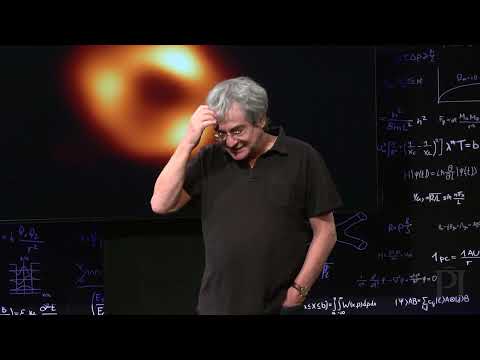 1:07:41
Carlo Rovelli takes the audience inside a black hole: horizons, what general relativity predicts and what loop quantum gravity suggests at the centre.
 54:10
How sinkholes form: karst geology, groundwater and the human activities that trigger collapses.

Lecture 1 of MIT 6.042J Mathematics for Computer Science: what a proof is, propositions, and proof by contradiction and induction.
 53:32
How cats were domesticated and how their senses and behaviour work, from genetics and archaeology.

Sean Carroll's public lecture on quantum field theory, the Higgs and where fundamental physics may go next.
 53:50
How the human brain evolved: fossil and genetic evidence for the growth of our brains.
 54:02
How genetic mutations such as lactase persistence let human populations digest new foods.

VPRO follows John D. Liu documenting the restoration of China's Loess Plateau and other desert-regreening projects.

KQED's documentary on California's Salton Sea: how an accidental lake formed, boomed as a resort and collapsed into an ecological crisis.

Robert Sapolsky on the biology behind human behavior at its best and worst.
 44:23
Colva Roney-Dougal introduces computational complexity: what makes problems hard, P vs NP and why it matters.
 50:48
Chris Lintott explains cosmic inflation: what problems it solves, the evidence for it and what remains uncertain.
 53:19
The story of entanglement from the Einstein–Bohr debate to Bell's theorem and a cosmic Bell test using distant quasars.

Douglas Hofstadter on how analogical leaps led Einstein to light quanta.
 59:03
Katie Mack walks through the possible ends of the universe: big crunch, heat death, big rip and vacuum decay, and what the data say.
 59:09
Mark Miodownik's 2010 Christmas Lecture on why size matters in materials: scaling laws, strength and structure.
 55:03
Netta Engelhardt explains the black-hole information paradox and the recent 'island' results suggesting information escapes.
 1:13:26
Gabriela González explains how LIGO detected gravitational waves and what they reveal.
 57:22
Ian Stewart's 1997 Christmas Lecture on the mathematics of pattern in nature: sunflowers, snowflakes and symmetry.
 53:33
The fossil evidence for how whales evolved from land mammals, from Pakicetus to modern whales.
 1:00:44
Helen Czerski on carbon: its chemistry, the carbon cycle and how it built the living world.
 1:52:56
The first lecture of Oxford's Introduction to University Mathematics: sets, logic and the language of proof that first-year students need.

Leonard Susskind opens The Theoretical Minimum with the foundations of quantum mechanics for learners who want real physics, with calculus and linear algebra.
 47:15
Ron Smith introduces atmospheres: composition, pressure, the hydrostatic law and how Earth's atmosphere compares with other planets'.

Vladimir Voevodsky asks whether first-order arithmetic could be inconsistent and motivates univalent foundations and computer-checked proofs.

Leonard Susskind on the arrow of time: entropy, cosmology and why the past differs from the future.
As an Amazon Associate, BrighterTube earns from qualifying purchases.