1:01:03Aleksandra Kaye: Text-Mining & Network Analysis of the Polish Diasporic Periodical Press, 1830-1930Advanced
58:14Amanda Regan: Mapping the Gay Guides: Using Digital History to Explore LGBTQ Travel GuidesAdvanced
1:02:46Julia King: Syon Abbey & Women’s Reading and Community as a Model for Bibliographic Network AnalysisAdvanced
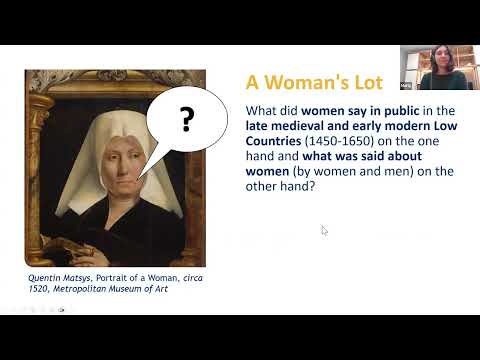
1:17:43Marly Terwisscha van Scheltinga, Sara Budts, and Jeroen Puttevils: (Fe)male Voices on StageAdvanced
1:02:19McShane & Vanden Borre: Gender, Genealogy, and the Experimental Recovery of Women’s HistoriesAdvanced
36:18Máirín MacCarron - Women and Time: a data-driven analysis of the Latin World Chronicle traditionAdvanced
1:01:51Nathan Richards: TechnoMnemonics: Navigating the Middle Passage Across Algorithmic UndercurrentsAdvanced
59:03Nik Ribianszky (Queen’s University Belfast): The Natchez Database of Free People of Color, 1779-1865Advanced
1:00:40Rachael Haslam: Trust & Distrust - Network & Linguistic Analysis of Medieval Church Court DisputesAdvanced
55:40Ruben Ros: Between Necessity and Contingency: Modelling the History of (De)Politicization, 1945-Advanced
1:04:34Ruth Ahnert and Sebastian Ahnert: Tudor Networks of Power - looking backwards and forwardsAdvanced
58:24S. Wright Kennedy: Separate but Dead: Mapping Disease & Segregation in New Orleans, 1880-1915Advanced
1:01:13Smits & Wevers: Orientalist pixels - revealing the colonial color palette of early photographyAdvanced
1:09:33Waitman Beorn (Northumbria) – Digitally Mapping the Holocaust through the Janowska CampAdvanced
 1:01:03